

 UN
UN 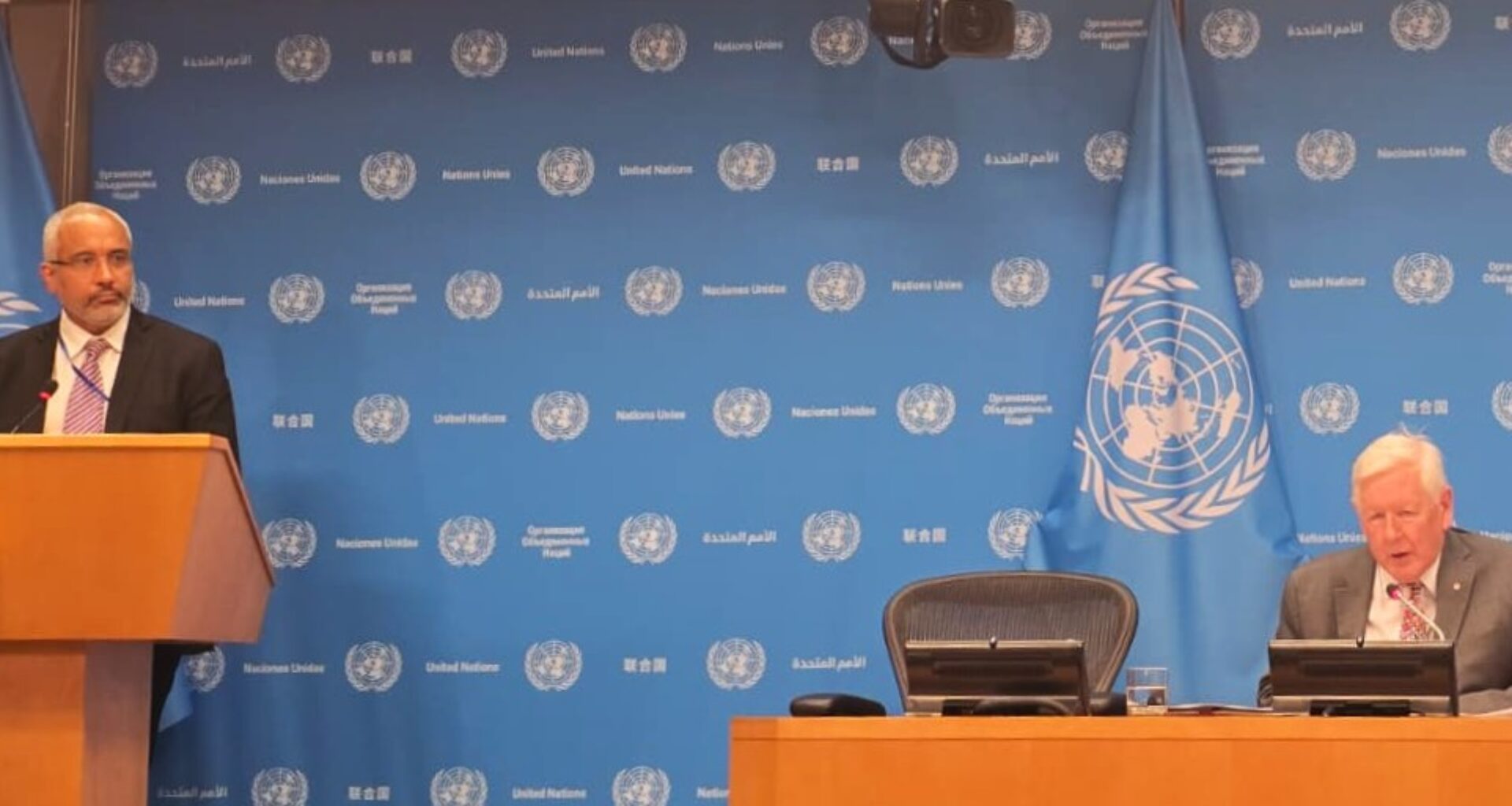
(SDGTALKING) By Bunyamin Surmeli – Ambassador Paul Ray, President of the United Nations Economic and Social Council (ECOSOC), assessed the current status of the implementation of the Sustainable Development Goals (SDGs) at a comprehensive press conference held prior to the UN High-Level Political Forum (HLPF). Reminding that there are only five years left until 2030, Ray said, “We are past the halfway point, but we have not made enough progress to achieve all the goals. The goals do not belong to the UN; they belong to the member states that have adopted them and are responsible for implementing them.”
Ray began his speech by thanking the representatives of governments and civil society for their active participation in all sessions held to assess sustainable development issues. He emphasized that health, gender equality, economic growth, marine life, and global partnerships were the main topics on the agenda this year. Noting that the scope of the Voluntary National Reviews (VNRs), which constitute an important part of the SDG monitoring process, has been expanding, Ray said, “To date, 190 of the 193 member states have participated in this process. Some countries have submitted VNRs three times. This is a strong indicator of global ownership.”
“How will we move forward after 2030?”
Emphasizing that 2030 is not a finish line and that development is a continuous process, Ray said, “Life will not end in 2030. The real question is: How will we move forward after 2030?”
Noting that the past five years have been extremely turbulent for global development, Ray pointed out that the COVID-19 pandemic, conflicts, and the climate crisis have set back global well-being. He said that these developments have had devastating effects, particularly on poverty, food security, migration, infrastructure, and public services. “There are more homeless people in the world today than at any time in history,” Ray said, adding that war and the climate crisis have increased waves of forced migration and deepened global inequality.
Nevertheless, Ray pointed out that there has been significant progress in some areas, noting that there have been significant declines in child mortality rates, improvements in maternal health, and positive developments in access to education, particularly for girls. However, he emphasized that these achievements do not mean that all goals have been fully realized. “This is not a list of failures,” Ray said. “But we have to see that the glass is not completely full. We know what needs to be done in the areas where we are lagging behind, and we must take action.”
“Gender equality may take 300 years to achieve”
Ray also commented on gender equality, saying that she found Secretary-General Guterres’ warning that “gender equality may take 300 years to achieve” discouraging, but emphasized that progress in this area is unstoppable.
“Women’s equality is no longer just a matter of justice, but also a fundamental driver of economic growth,” Ray said, noting that women’s full access to the workforce, decision-making mechanisms, and property rights boosts development. “The fight for women’s equality is growing, gaining strength, and will ultimately succeed,” she said.
“The decision to withdraw from the WHO is sad”
Responding to questions from journalists at the press conference, Ray described the US decision to withdraw from the World Health Organization as ‘sad’ but stressed that it would not end global health efforts. “The WHO’s work will continue. Institutions are resilient.
But the withdrawal of a country like the US will have consequences. We must act with this in mind.“
Speaking about the financial crisis facing the UN, Ray said that the funding problem lies not with the UN but with member states that are not meeting their payment obligations. ”The UN cannot borrow money or transfer its surplus budget. This system is not a financial structure designed for success,” he said, pointing to the fragility of the current structure. Ray said that the failure of major donor countries such as China and the US to pay their dues on time has created serious gaps in the UN system. Referring to countries that delay their payments, he said, “We call them ‘deadbeat dads.’ Countries that do not pay their dues are undermining the functioning of the global system.”
Characterizing the growing global criticism of the UN system as “ideological attacks and disinformation,” Ray said, “People don’t know what the UN does because we don’t communicate it well enough. The biggest communication mistake is assuming that the message has been conveyed.” He added that the UN needs to communicate more effectively, but that the real responsibility lies with political will at the national level.